Translate

Monday, April 18, 2016

How homes have changed thru the decades…


As a Realtor® I get t see a lot of homes from a lot of different decades. I can usually predicting what we are about to see, just based upon the era in which a home was built. Home styles and configurations have changed over time and homes became somewhat more predictable starting in the 1950’s with the introduction of tract home subdivisions.

The folks at Fielding Homes sent me this link to an interactive infographic that they created which shows the progression of homes starting in the 1950’s until the present. They tracked such things as the average number of people who lived in each household, the average size of the homes in Square Feet (from which they derived the average amount of Square footage the each resident had), the number of cars and later of TV’s per household and a few other statistics. They didn’t really comment on the sytles that each era embraced, which I’ll comment on a bit here.

The infographic starts at 1950, which is traditionally thought of as being the “modern era”. Homes build prior to 1950 were almost all custom built and are generally classified as “historic homes.” Interestingly in many small towns across America there are homes that one may consider to be the precursor to modern tract homes; these were the “mail order homes” that Sears and Montgomery Wards and a few other big mail order retailers sold for a while. One could literally order a home from Sears and have all of the materials and instructions delivered by rail to the local railroad stop.  The parts were all pre-cut and numbered and the homes were assembled on site by following the instructions that were sent along with the house. These homes were usually constructed by local carpenters. You can identify a Sears mail order home of you go down in the basement or under the house in the crawl space and see if the floor joists are numbered. To learn more about Sears homes, click here to see the WikiPedia page on them.

Historic homes were generally ranches (sometimes called cabins), bungalows or colonials in style. They may be much smaller than modern homes, especially the bedrooms and often the kitchens. Some may have been originally built without indoor bathrooms or plumbing (other than perhaps a hand pump in the kitchen). Some didn’t even have indoor kitchens. Assuming that you are visiting a nicer or more modern version of a historic Colonial home there would usually still have only been one bathroom and that was usually on the second floor, as were all of the bedrooms.
More upscale historic homes (usually those of the wealthy merchants of the town) might have had a parlor as well as a living room, a dining room and the kitchen on the first floor. Nice wood floors and wood trim in each room would have been normal, possibly with built-in bookcases in the one of the rooms (maybe the den or library if it had one). Really nice homes might have had two stairways, one in the front and one in the back that ended in the kitchen. Some may have even had servants’ quarters, which were usually reachable via the back stairs. Grand old houses in the bigger cities might have been three stories with a ballroom on the top level. If they had a garage, it was usually a single car detached garage.

Starting in the 1950’s the concept of subdivisions with tract houses that all looked pretty much the same came into fashion. The trend was actually a response to the need to build lots of houses quickly for soldiers returning from WWII who needed places to live. Many of these houses were the first in the communities to make use of drywall rather than plaster. Drywall was developed during WWII to make building barracks for soldiers quicker and more economical than plaster walls and ceilings. Many of these early subdivisions were built as small ranch style houses with three bedrooms and one bath, a living room and an eat-in kitchen. Many were under 1,000 Sq Ft. and most had detached garages, if they had garages at all. Today these little ranches provide the bulk of our “starter home” inventory. They also almost always had hardwood floors, but this was the start of several decades of the practice of immediately covering the hardwood floors with wall-to-wall carpet. Today’s buyers can’t wait to rip off the carpeting if it is still there and expose and refinish the nice oak flooring that was the norm back then.  

One can also find colonial homes built in this era and most are very traditional layouts – living room, dining room, and kitchen on the first floor (with maybe a library or den to balance the floorplan out) and the bedrooms 3 or 4 on the second floor along with the bathroom. Almost all of the homes that were built in the 50’s have been modified, added-onto or updated  in ways that add another bath or half-bath on the entry floor or in the basement and added the missing garage (usually detached).
The 60’s and 70’s saw the emergence of the “modern” homes and the advent of the split level home – bi-levels, tri-levels and quads. This allowed at least three levels to have full, daylight windows. It also ushered in the common practice of having the garage attached to the house with direct entry into the house. Garages got bigger in this era too, with two-car instead of one car becoming the norm. The concept of the “family room” was also introduced and the living room began to become a room that was only used when “company” came over. Dining rooms were still the norm, but many become little more than an extension of the kitchen. Kitchens were still quite modest by today’s standards and many were still “galley style.”  Most of the houses of this era had 1 and ½ baths, some even had two full baths. In the larger colonials of the era some builders even added the concept of a master bath off the master bedroom although most were fairly small by today’s standards. Wall-to-wall carpeting was still the norm during this time.

The 80’s and 90’s saw the emergence of the “me” generation concepts – larger kitchens, master suites with on-suite baths, walk-in closets showed up  in the master bedroom and the great room concept became more prevalent, but now with large, two-story, “volume ceilings”. This era also saw the emergence of the Cape Cod style home with everything for the owners on the first floor and a 2-3 bedrooms on the upper floor, usually sharing a bathroom. Libraries or dens on first floor became more common and most were converted to offices. Breakfast rooms or nooks replaced the eat in kitchen in many homes.  In larger homes amenities such as crafts rooms or wine cellars or movie rooms became common. The laundry areas moved to the first floor or even up to the upper levels where the kids generated most of the laundry.  Garages grew to 3-cars or more and large decks, balconies and patios became the norm. It was during this era that McMansions became the norm for upper end houses, even if they were on small lots. Hot tubs had their brief heyday during this period. Hardwood flooring reemerged as a preferred choice, with lower end homes choosing Pergola or other engineered wood lookalikes to save money. Granite counters became the thing to have in the kitchens and baths.

The turn of the century saw the continuation of many of the styles and features that emerged in the 90’s, with more and more “upscale” features and amenities creeping downward into more modest houses. The living room finally went away in many homes, as did the formal dining room – both victims of the more leisurely lifestyles of the era and the dominance of the great room and family room concepts.  Kitchens and master bedroom suites became the focal points of the homes, with large and elaborate master baths becoming common, as well as “gourmet kitchens” with upscale or industrial or restaurant-quality appliances. More and more choices of materials and finished came into vogue, with many choices other than granite becoming available for countertops and many new flooring choices to choose from. Outdoor rooms with pergolas became the entertainment centers for the warmer months.

So, when you see homes listed for sale, look at the years that they were built to get an idea of what you might find if you visit them. Certainly many homes have been updated over the years, but few have been extensively renovated enough to overcome some of the initial limitations that were built into them. Perhaps the basement was finished and an extra bathroom has been added over time or the kitchen extensively updated. Few undergo the kinds of renovations that one sees on the TV shows, where the house is gutted down to the studs and redone. Even then the bed room sizes can’t be changes much without adding on, so you are still limited in what you can do with a house built before modern times. Some people make the mistake of turning a three bedroom house into a 2-bedroom home in order to gain some extra space for a master suite. That might fit their needs, but is severely limits the marketability of the home when it is time to sell and probably decreases the value.


If you make a list of your “must-haves” before you go house hunting, you can use these guidelines to help you save some time by eliminating those built in era’s where your must-haves were “didn’t-haves”. If you want a home that was built later than the 1960’s you won’t find a lot of smaller, starter homes. Builders all refocused on the needs of the Baby Boomers and started building bigger houses with more amenities. Looking in a price range under $200,000 in this area of Michigan will almost always mean looking at homes that were built before the 1970’s. There were lots of homes in the $200,000 – 350,000 range that were built in the 1970 – 1990’s. Almost everything built in the later 1990’s to the present would probably be in the $300,000 and up range.  Call me and let’s discuss what you’d like to have and what might be available in your price range.

Tuesday, April 12, 2016

Denying a tenant based upon a criminal record is not Fair Housing…


On April 4, the U.S. Department of Housing and Urban Development (HUD) released a 10-page memo on the "Application of Fair Housing Act Standards to the Use of Criminal Records by Providers of Housing and Real Estate-Related Transactions." The Cliff’s Notes version of which may be stated - Landlords and property managers who adopt a blanket policy of refusing to rent to applicants with criminal records are in violation of the Fair Housing Act and can be sued and face penalties for discrimination. You can read the entire HUD document by clicking here.

The basis for HUD’s guidance can be found in their background material, which reads in part –
As many as 100 million U.S. adults – or nearly one-third of the population – have a criminal record of some sort. The United States prison population of 2.2 million adults is by far the largest in the world.  As of 2012, the United States accounted for only about five percent of the world’s population, yet almost one quarter of the world’s prisoners were held in American prisons. Since 2004, an average of over 650,000 individuals have been released annually from federal and state prisons, and over 95 percent of current inmates will be released at some point. When individuals are released from prisons and jails, their ability to access safe, secure and affordable housing is critical to their successful reentry to society.

Nationally, racial and ethnic minorities face disproportionately high rates of arrest and incarceration. For example, in 2013, African Americans were arrested at a rate more than double their proportion of the general population. Moreover, in 2014, African Americans comprised approximately 36 percent of the total prison population in the United States, but only about 12 percent of the country’s total population. In other words, African Americans were incarcerated at a rate nearly three times their proportion of the general population. Hispanics were similarly incarcerated at a rate disproportionate to their share of the general population, with Hispanic individuals comprising approximately 22 percent of the prison population, but only about 17 percent of the total U.S. population.  In contrast, non-Hispanic Whites comprised approximately 62 percent of the total U.S. population but only about 34 percent of the prison population in 2014. Across all age groups, the imprisonment rates for African American males is almost six times greater than for White males, and for Hispanic males, it is over twice that for non-Hispanic White males.

HUD found that landlords often do criminal background checks and then use what they find to refuse to rent their properties to people with backgrounds that include criminal convictions or even arrests, even if no conviction resulted from the arrest. HUD concluded that people of color and Hispanic people are statistically more likely to have had arrests and convictions at a rate that is disproportionate to their representation on the general population; thus using those records constitutes basic discrimination against them, with no actual proof of any predisposition that would prevent them from being good tenants. One exception apparently was made for those convicted of the manufacture of illicit drugs. A landlord can apparently be excused for not wanting their property to be turned into a Meth lab or a “grow house.”

Our criminal justice system is based upon is the concept of paying for your crime and the thought that the incarceration for crimes will serve as a deterrent to future crimes. While stories of repeat or habitual criminals often make the nightly news, there are few stories that document the many convicted felons who do turn their lives around and become productive citizens when they have served their time. There is a premise that the convict who has served his time will be given a second chance at a normal life within our society.  That second chance is made more difficult if that person is denied housing due to their past record. Thus, the new HUD guidelines.


If you are a landlord you need to be aware that a practice of doing a background check and then automatically denying the applicant based upon finding arrests or even felony convictions in their background will not be tolerated. The burden of proof that you did not follow that practice is on you. For the applicant, it is still up to you to provide convincing evidence that you are capable of paying the rent and that you will be a trustworthy tenant. That usually takes the form of references and employment proof and perhaps a record of making reliable payments on an apartment or wherever you’ve been living since leaving incarceration. If you believe that you have been denied solely or primarily because of your past criminal record you should contact local HUD officials and lodge a complaint.  

Wednesday, March 23, 2016

Dan Elsea's Jan-Feb Real Estate Market Report


Each month our Brokerage President, Dan Elsea, reports on the local Real Estate Market in SE Michigan. Since it is based on sold data, his report always trails the market a bit, but it does provide useful insight in the direction of the market. This is his latest report, which is based upon homes that sold in January and February

Another month of mild winter weather has helped boost both the number of homes sold, as well as the number of new listings entering the market. For the under $250,000 price ranges, the homes sales have risen faster than the new listings, causing a drop in listing inventories. For the over $250,000 markets, new listings are coming in faster than sales, pushing up inventories.


In all price ranges the Months Supply of Inventory(MSI) as fallen over the past 90 days compared to last year, which confirms that the overall direction of the market is still positive. As we move out of the winter months, the MSI normally declines as sales pick up speed. The pace of the decline is faster this year as a result of the increasing pace of sales. As we said in prior months, we won't really be able to judge the strength of our local metro market until April or May, once we see if the milder weather created more buyers or simply moved the same number of buyers to act earlier in the year.


Under $250,000 Price Range

There are 20% fewer homes to choose from in the under $150,000 market and 10% fewer between the price range of $150,000 and $250,000, so buyers will feel even more frustration going into this spring than last.  Pending sales (new contracts written) in the under $250,000 price range are up, while the low inventories have pushed the average price per square foot up 7% for the under $150,000 homes and up 4% for the $150-$250,000 segment. New listings entering the market are up, giving some hope of relief to buyers as the spring market unfolds.

 $250,000 - 500,000 Price Range

For sale inventories are up 4% over last year, giving buyers a few more choices going into the spring. Sales were also up quite a bit as well, 24% compared to last year. This increase in sales can be attributed to the milder weather. New listings entering the market are up about 15%, confirming that sellers are reacting to the growth in their equity and coming back into the market to sell and buy. The average value per square foot is up over last year, rising about 2%, a modest increase, influenced by a larger supply of homes for sale.

 Over $500,000 Range

Inventories continue to rise in the upper price ranges but so have pending sales, making a nice 25% jump in the past 60 days. New listings entering the market also hit a 25% increase. The average price per square foot increase of 7% over last year was the most we have seen in quite some time. We still think the trend for the upper-end markets is slowing, but because of a combination of good weather and a thin market, it does not take a big increase (or decrease) in activity to cause the higher priced markets to fluctuate on a month to month basis.

 Overall, we are entering the spring market with continued strong buyer interest, particularly in the under $250,000 price ranges, and we are beginning to see For Sale inventories build up a bit, giving buyers a few more choices than last year for the over $250,000 markets.

Dan

Monday, March 21, 2016

Home warrantees – boon or boondoggle?

The Home Warranty is a ubiquitous fellow traveler in many home sales, but not all. A home warranty is just what it sounds like – an insurance policy to protect the home buyer against a number of things that could go wrong in the home during the first year of ownership. Policies differ in what they cost and what they cover and they are usually paid for by the seller; however, the buyer may purchase a home warranty, if he does it at or before closing. Things usually covered include failures in major systems like the HVAC or the hot water heater or many plumbing issues.

The reason that not every home sale carries the protection of a home warranty is mainly due to the unevenness of the coverage of policies from the companies in the business and a history of business practices by some of them that have given the whole industry a bad reputation with many buyers. Much of that bad reputation can actually be traced to the home buyer misunderstanding the home warranty policy coverages or how the company’s business practices work when a claim is made.

Way too many people thought that everything was covered under the umbrella term “Home Warranty.” In fact, each policy has a clear list of items that are covered and those that are not, just like an automobile or home owners policy does. Many people just don’t read their policy to see what is covered and then they get mad when they call in with a claim and discover that the item that just failed is not covered. Some home owners also disagree with the standard policy to repair items rather than replace them, unless repairs cannot be made. Most warranty companies have adopted policies that replace older air conditioning units that don’t meet current standards because their repair people cannot get the parts or the Freon to deal with those older units.

The other sticking point with many is the business practice that requires that the home warranty send out the repair person to evaluate the claim. That call is usually charged to the home owner at $85, however, that $85 is refunded if a repair is needed and covered by the policy. If the repair person gets tot eh house and the “failed” hot water heater just has a pilot lite that blew out the homeowner is out that $85. That makes many home owners mad; and since they can’t get mad at themselves, they get mad at the home warranty company. 
  
The companies in the business also shot themselves in the foot in earlier times by poorly handling claims or providing very poor customer service and explanation of coverages. I hear the terms “worthless” all the time when mentioning home warranties; however, that if far from the truth. They can be lifesavers if items that are covered do fail. I have a neighbor across the street who got a whole new furnace less than 4 months after he moved in because his old furnace failed and the home warranty company couldn’t repair it.


So what should you do if you are buying a home and are offered a Home Warranty? I’d say go for it; but, do a little research first on the company that the seller is offering to foot the bill for. It may be better to negotiate with the seller to switch the warranty to a better company, even if you have to kick in a little to make the switch. Here is a link to an excellent article on Home Warranties and the Companies that offer them on the Reviews.com web site. Check it out and remember to read the warranty to make sure that you understand what is covered and how the claim process works. 

I recommend going to Reviews.com for helpful information about many more topics. Check out their site and all of the reviews that they have on-line there.

Sunday, February 21, 2016

10 Questions Buyers Ask Realtors®

A recent study by Realtor.com asked a lot of Realtors across the country what questions they were answering for today’s buyers. Eight of the questions below and some of the information and links embedded below about each question, came from that study. I’ve added my own insights to the answer for each question and even added another two question that I get a lot to the end.
Q: How much home can I afford?
That depends, of course—on your income and other financial obligations; plug them into realtor.com’s Home Affordability Calculator for a ballpark figure. Most importantly, meet with a lender to get pre-approved for a home loan which makes you much more attractive to sellers. One of the things that a good lender will help you determine is the answer to that question. A good lender will find out enough about you in the initial interview to give you a very good idea about what you can afford, as well as things that you can do to improve your credit score and things not to do that would hurt that score.
Q: Can I buy a home and sell my current one at the same time?
Yes, you can—but it is almost impossible to manage the timing of the two sales so that they both close on the same day (or close enough to each other) such that you can literally move out of your old home and into your new one with a single move and no disruption. You need to have a plan for covering the gap that most likely will occur. Remember that a buyer for your old home will likely want to take possession as soon as possible and asking for a long delay either before closing or long post-closing occupancy will make the sale of your current home unattractive. Of course moving out before you have a place to go is unattractive to you, too; but you need to plan for that happening.
Q: How many homes should I see before making an offer?
This varies for each person. Some people find their home within hours of hunting. For others, it takes months. While home shoppers these days can look at hundreds of homes online, national statistics show they only visit to check out 10 homes on average before they put in an offer. I have worked with a few buyers for as long as several years before we found the right house. On the other hand, I have had buyers who loved the first home that we saw and didn’t look any further before making their offer. I think it is key to spend some time making a checklist of the things that are important to you before you start looking. Share that list with your Realtor, so that he can save everybody some time and effort by customizing a search for you that returns homes that meet your criteria. I also recommend doing drive-bys before scheduling a visit. Sometime you can eliminate homes from your prospect list just by driving by them to check out the areas that they are in and the condition of the property from the exterior.
Q: What do you think the seller will accept as a fair price?
Each real estate area is slightly different and the market in each can vary as well. Some areas may be experiencing “tight markets” with very low inventory; while another market in the same town may have a glut of homes. Even the definition of what the “market” is varies in size, types of homes and other factors. Your Realtor should be on top of the markets in the areas that he or she covers and be able to tell you what type of market you are looking in. If the home is well priced and in a fairly stable and balanced market it, will generally sell for about 97% of the asking price, so knocking 5% off the list price won’t usually ruffle any feathers. If it’s been sitting on the market for months, especially in a slow or glutted market, you can make an offer more 5% off the listing price. The bottom line is you never know how low a seller will go. If the sellers are eager to move, you could luck out and score a deal. On the other hand you could just tick off the seller and he will refused to negotiate or dal with you in the future (I’ve had that happen on occasion).
Q: How do I know if the property is a good deal?
While there’s no crystal ball on whether a certain home is a bargain and will appreciate, rest assured that with research, you can keep surprises to a minimum. The best way is to have your Realtor check out comps—what similar properties are selling for in the area—and whether those prices have been going up or down in the recent past. The best deals are those in which both the Buyer and Seller feels like the sale was a win for them both. Also remember that some so-called bargains turn out to be just money pits because of the issues that made them such bargains in the first place. Many buyers, especially first time buyers, learn that lesson the hard way during the recent “Great Recession” by buying foreclosed bargain houses, only to lose them six to nine months later when they ran out of money to fix them up. Those bargains didn’t turn out to be good deals.
Q: How quickly can I close?
The old conventional wisdom was 30-45 days from the date of the offering being accepted. With the implementation of the Dodd-Frank Laws and the recent changes in the mortgage disclosure rules the new thinking is to plan on 45-60 days from the offer acceptance. The closing could stretch out if the inspection finds issues that need to be resolved prior to closing or if the appraisal does not support the sale price. For FHA and VA mortgages the appraisal is also an inspection of sorts (not to be confused with the home inspection that you still need to get – see below) during which the inspector may identify issues with the home that need to be fixed in order to proceed with the mortgage. Those issues are usually safety related these days, but they can cause delays and you negotiate with the seller for the needed repairs and then schedule the appraiser back into inspect the repairs. Those issues alone can add weeks to closing date on the deal.
Q: Should I get a home inspection?
While buyers often wonder if a home inspection is truly necessary, most Realtors unequivocally say yes, yes, and yes. I good home inspection will take many of the unknowns out of the process and reduce your risk of encountering major surprises later. The inspection process may also serve as a great educational opportunity for you to learn all about your new home, if you pay attention and follow the inspector through the process and take notes. The results of the inspection will allow you to ask the seller to make any repairs prior to closing or to make a concession on the sale price so that you can fix the issues later. A good inspector will be able to give you a ballpark for the repairs, but you should still get estimates for anything major. The inspection results also provie you with one of the “outs” from the contract (see below).

Q: When can I back out if I change my mind?
While buyers can always back out of a deal, doing so without good reason may forfeit their earnest money (the cash put down to secure the offer, typically around 1%-2% of the home’s price). But there are some ways to walk with your earnest money in hand. I wrote a post on the Realty Times blog site entitled, “I know I signed a contract, but what are my outs?” The outs are in the contract to protect you against having to go through with a deal if something so onerous comes up during the inspection process or the mortgage process or the title search that you no longer wish to purchase the house.

Q: I’m a first time buyer; what things do I need to know?
If you are a first time home buyer you may want to read through the whole series of posts that I made for first time buyers on my Milford Team Web site. The posts about advice for buyers in general  are written in a Q & A format. Click here to go to the web page that has the links to that Q & A series of post. There you will also find tons of other links to material that you may wish to read before you start the process. The things that I’ve posted about there came out of real life experiences with many first time buyers.

Q. Why do I need to have a Realtor?
In the Internet Age, when buyers can find out all about a house by searching on-line, there is a tendency to think that maybe you don’t really need to have a real estate agent yourself. After all, there is already one agent involved, so why not just call him or her? The answer lies in understanding the process involved and the roles of the people involved. There is quite a bit that goes on behind the scenes in the real estate process in a real estate transaction that the average lay person is not aware of or enough versed in to take on by themselves. It is not as simple as the HGTV shows make it look. Also one must consider who the listing agent is working for and what that means to the buyer. Listing agents work for the seller- period. Their job is to get the best deal for the seller, to negotiate on behalf of the seller and to protect the seller’s interests. They have no fiduciary responsibility to the buyers. Calling on the sign and trying to work with the seller’s agent puts the buyer immediately at a disadvantage. Some buyers mistakenly think that working through the seller’s agent will somehow get them a discount or a better deal. Most of the time, all that it gets them is a happy seller’s agent who gets to “double dip”.  It is not cynical or any reflection on the honesty of the seller or their agent to assume that you need your own representation. Having your own agent to do the market research to establish a fair price, protect your interests and negotiate on your behalf is important and does not cost anything more than going it alone.

If you have a home buying question that I might be able to answer, send me an email with your question to normwerner@comcast.net. Remember that I’m a Realtor in Michigan, so I won’t be able to answer questions that might be specific to the laws in some other state.

Tuesday, February 16, 2016

Does your house have ghosts?


I’ve posted on another blog in the past about the vampires that all modern homes have lurking in 
them – those little energy sucking vampires that are associated with almost all electrical devices that we have all over our homes.  You can easily spot the vampires in your home by turning out all of the lights at night and seeing how many things are still glowing in the darkness. Those are vampires. You can read that post by clicking here; but what about ghosts? Does your house have them too?

Ghosts hang out in various places in many homes. One of the more noticeable places is on the
ceilings. These ghosts are the faint little dark splotches that start at the wall edge and seem to crawl outward towards the center of the room. They all go one way and seem to be evenly spaced. They are evenly spaced because that are indications of where your ceiling joists run across the room. These ghosts are caused by poor insulation in the attic along and above the ceiling joists, which allows cold air to get down to the topside of the wallboard. Those cold spots on the ceiling tend to cause a little condensation and the natural flow of heated air in the room does the rest to create the ghosts by carrying minute bits of airborne dust upward where they stick to the moist areas. In no time at all, you have ghosts!

Another area where ghosts sometimes congregate is at entry doors. If the door doesn’t seal properly, especially at the bottom the cold air leaking in causes the same damp areas on floors or carpeting that
can collect dust and dirt, especially right at the threshold. All of a sudden you have ghosts in your carpet. You can usually prevent or cut down on this type of ghosting by replacing the door’s bottom seal. Just using one of those cute little door draft gadgets that lies on the floor along the door bottom won’t necessarily prevent these ghosts from appearing.

Your closets, especially those on outside walls are another favorite places for ghosts to congregate. The issue is usually the same as for the ceiling ghosts – inadequate insulation in the attic at the top of the closet. Is it time to call the ghost busters? 


You can use Kilz on the painted areas and repaint them, but the ghosts will come back if you don’t fix the root of the problem, which is the inadequate insulation in your attic or bad seals on your entry door bottoms. The primary benefit of getting that insulation upgraded and puttng new seals on your doors will be the reduction in your heating and cooling bills, but a good secondary benefit is that it should rid your house of ghosts. Then you can focus your attention on vampire hunting to further reduce your energy bills. 

Tuesday, February 2, 2016

The new dentists office in Milford, MI...

I usually don’t get all that excited about a new dental office opening up in the area; but the new, Milford Family Dentistry office on Union St. came along just at the right time to get my attention. My dentist of 30+ years over in Commerce recently retired, as did my dental hygienist of 20+ years. My wife and I originally started going to that dentist when I lived in Orchard Lake and we didn’t mind driving back over to them for the 16 years that I’ve lived here in Milford; however, it will be a relief to have a local dentist right here in town. 
The Milford Family Dentists offices are in the building on Union Street that housed the
 practice of Dr. Barbara Huckabee for many years. When Dr. Huckabee retired, Drs. ToddMFD_dentists Napieralski and Brian Wisniewski , along with their associate Dr. Melissa Jett decided to open a location of their practice for Milford in the building. Todd and Brian met as roommates at the U. of M. dental school many years ago and when they graduated they went into practice together in Chelsea, Michigan over 23 years ago. I got to know Todd aMFD building on Unionnd Brian and Melissa, as well as their staff at a recent Chamber of Commerce ribbon cutting for their new office in Milford and then at an open house that they hosted that evening. What a fun group. I think you’ll like the doctors, their staff and the modern equipment that they have installed in the grand old house that they occupy.
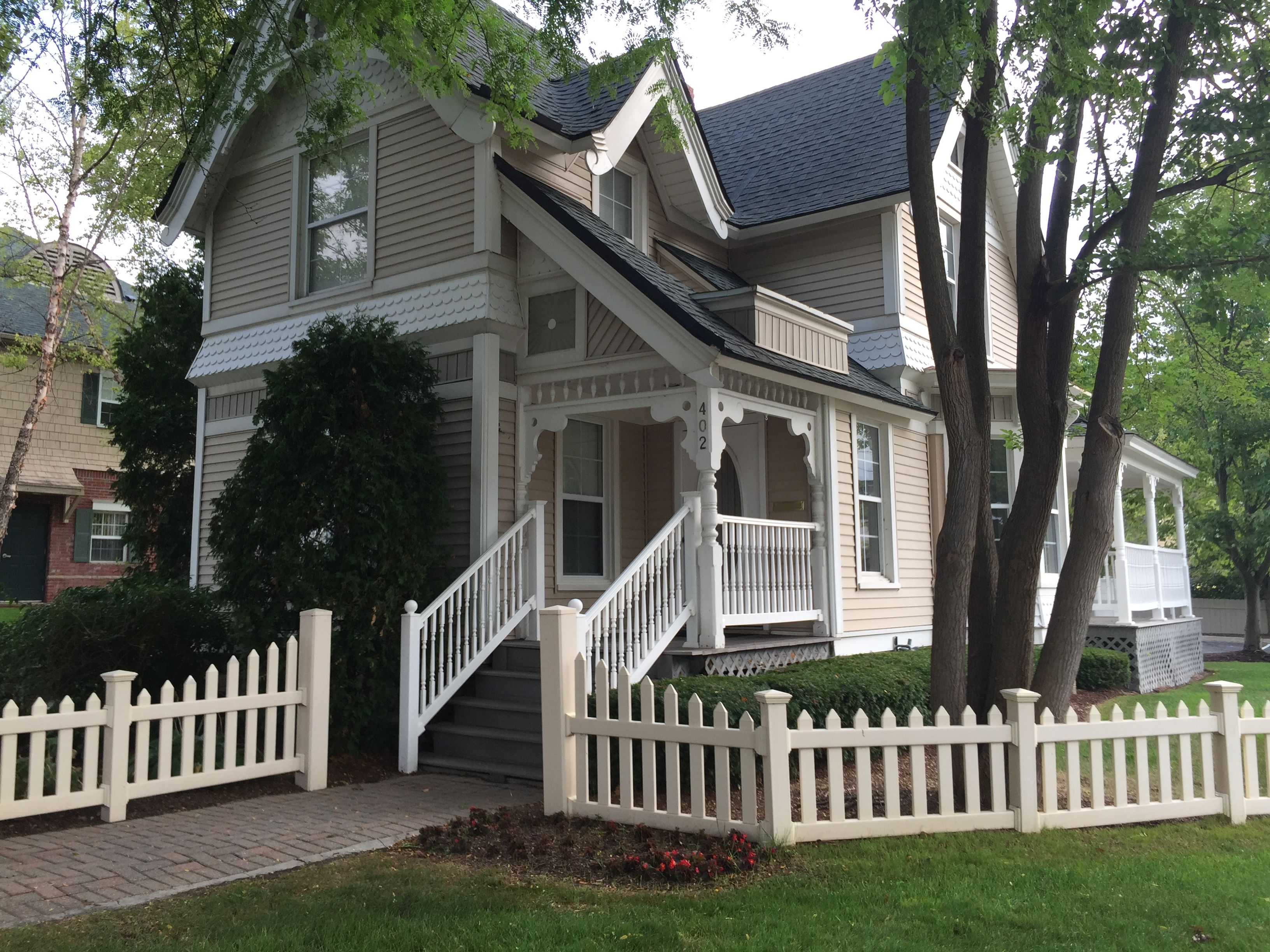
As both Todd and Brian explained it, they had been looking to expand their practice into a new location for some time; but they wanted to find just the right place; someplace with the small town flavor, culture and ambience that they love about Chelsea. Milford provided that atmosphere and the perfect backdrop for what they hope will be a long and successful practice here. Based upon my impressions of all three of them, and the entire staff, that should be no problem. All three doctors are outgoing and fun loving and very easy to talk with and all three are also excited about being able to sample Milford’s many fine restaurants, which is something that Chelsea can’t match. They also hope to become deeply involved in the fiber of the community and can’t wait to participate in our many community events, parades and festivals.
I had some trepidation about finding a new dentist, since I hadn’t had to worry about that for 30+ years; but all three doctors put my mind at ease right away. They even made it easy to talk about trying to decide on which of them to see, since they have the practice set up so that any or all of them are available to all patients and they expect that clients will eventually just settle in with whichever one with which they hit it off best. They encourage new clients to come in and visit with one of more of them, to see if there is a better fit with one or another – no pressure to choose and no pressure to stay with any choice. I like that.
One thing they discovered about Milford right away is that there are several Milford’s around the country and another dentists’ office called Milford Family Dentistry in Milford, New Jersey had already claimed the .com Web site name that they wanted.MFD cropped-header Getting to that Milford Family Dentistry office would be a heck of a drive; so, if you need to find a dentist in the Milford, Michigan area; I encourage you to visit the Milford Family Dentistry offices at 402 Union Street. That is one block east of Main Street. If you want to find out more about their practice in Milford, visit their web site - http://milfordfamilydentistry.net/ . They are currently open Monday, noon until 6 PM, Tuesday 9 AM until noon, Wednesday 9 AM until noon and Friday 9 AM until 1 PM. As they build the Milford practice their hours will expand and they hope to have early evening hours on some days to accommodate people who can’t get out of work to go to the dentist.
So check out the new dentists in town.  Tell them that Norm sent you.

Thursday, January 21, 2016

Our agent isn’t working hard enough to sell our house…


I recently overheard that comment from someone that I have known for some time. I didn’t butt in and say anything, but it was interesting to hear. It was also a bit painful, since these same friends had prevailed upon me a year earlier to give them some advice about what to do to get their house ready to sell and asked what I thought it might sell for when they did put it on the market.

Apparently I was too honest for them, and my own good, with the advice that I rendered at the time. They didn't do the things that I recommended and found another agent who would tell them what they wanted to hear,especially about price; and they listed with him, a little over 6 months ago at a price well above what I had given them. Apparently the listed price was also well above what the market sees as the value of the property, since it is still sitting on the market. But, that’s likely because their agent “isn’t trying hard enough to sell their house.” Or, so it seems to them.


Some of the most valuable work that a good agent does occurs before the house is put on the market. It involves assessing the condition of the property and giving the would-be sellers advice on things that might be done to help the property sell faster or for more. It also involves doing the research to understand the market and how the property is going to fit into it and at what price it should be positioned within that market. If the agent is good at what they do, and the clients will listen to and heed the advice that they get, the house will sell relatively quickly in any market. In our local market that will probably happen within the first 30-45 days.

The local real estate market is very tight, with low inventory; so buyers are quickly attracted to any new listings. They are also quickly turned-off by sellers who ignore their agent’s
advice and overprice their homes. Some agents are very good at sensing what it will take to get a listing, even if it means initially overpricing it; and they are not above going along with the sellers and setting the initial listing price too high. They do that for two reasons – 1) they get the advertising benefits of having their signs up in public, and 2) they go into the listing with a plan to reduce the price as quickly as possible to what they know is the true market price. That is a morally questionable way to do business, but perfectly legal. It feeds on the desire of the seller to hear what he/she wants to hear, rather than deal with the truth.

Sometimes that strategy backfires on the agents; especially when the seller remembers that the agent initially agreed with their overly high listing price. Sometimes the agent isn’t trying all that hard to market or sell the overpriced house, because he/she knows that it would be wasting money on a product that will be rejected by most prudent buyers. If they get showings the feedback will likely be fairly consistent about the price being too high, so they can start pushing on the seller to lower it to where it should have been all along. If the seller resists for too long the house can become stigmatized, as would be buyers look at the old listing and wonder what’s wrong with the house to make it sit on the market for so long.

As for the concept of the agent selling the house; that is a bit off base, too. The agent’s job
is to market the house effectively so that people make showing appointments or visit open houses. There is a saying in real estate that the house will sell itself and that is largely true. There are things that the agent can do to make the visit experience to the house better or make the house show better; however, the concept of selling the house, as if it were a consumer product doesn’t really hold true. A good agent night use some of the same consumer product sales techniques in marketing the property, such as dealing with objections or highlighting the positive features and downplaying any negatives; but, Realtors are not consumer product salesmen and the good ones don’t act like one either.

So, how can you tell if your agent is “working hard” to sell your home? You can go on-line and see what kind of job he/she has done to get widespread publicity for the property. Go onto 3-4 real estate web sites and see if your property is advertised on them. Read the ads to see how the house is being positioned and marketed. See if the agent has posted a virtual tour or video tour for the property and check it out, too. Ask about open houses and the agent’s plans for them. See if your agent has a marketing plan for the house and ask him/her to go over it with you.

Don’t worry too much about not seeing your house in the local papers, most modern buyers wouldn’t see it there either and most real estate companies and agents have greatly reduced their use of print ads. Instead, download 1 or 2 of the real estate smartphone apps and see if you can find your property on them and what the presentation of your property looks like when compared to others. All of those things represent the “hard work” that your agent should be doing in today’s real estate marketplace.


Finally, if it’s been 5-6 months and you’ve had few showings and no offers, it may be time to swallow your pride and listen to the honest advice of your agent or another agent about what your property is worth in the current market. If that price is not something that you can live with, then take it off the market and wait a year or so until the market catches up with your grand vision of what you property is worth. You are wasting everyone’s time and efforts – those of your agent and the buyers who visit the property. Maybe it wasn’t that the agent wasn’t working hard enough to sell your property; maybe it was that you really didn’t want to sell it bad enough to take what it is worth.

Saturday, January 9, 2016

Buying in at negative equity…

One of the things that a buyer has to watch out for, especially with new build houses, is whether or not they are buying in at too great of a negative equity position. Builders always seem to price a little higher than the sold price averages of existing homes in the current market would dictate. Some of that is attributable to the “new factor”. Everything is new, so there should be little in the way of maintenance or update costs for several years. That certainly justifies a premium of some sort; but, it is that premium that is contributing to the negative equity of the property.
Equity may be defined as the net value of the house as an asset – it’s sales value less the cost to payoff whatever the remaining mortgage balance is at the time, i.e. what you put in your pocket after the sale is closed. Prior to the recession there had been a commonly accepted notion that equity in homes always went up; sometimes slowly and sometimes rapidly, but always in the same positive direction. If the quick run-up during the housing balloon period that led to the Great Recession is taken out, the historic appreciation curve showed a steady increase in home values of about 3.0 - 3.5% per year for decades, going back to the end of WWII. So, if you bought a house and maintained it well, you could count on its market value increasing that much each year.
Then the Great Recession hit and our notions about home values and the equity that we have in them got turned upside down. We all got somewhat used to the concept of negative equity during the
recent “Great Recession.” That is where the house is worth less that what you paid for it. Some homes in the area around Southeastern Michigan lost 30-40% of their pre-recession values; with many in cities like Detroit, Pontiac, Ypsilanti and other losing more than 50% of their pre-recession values. New terms were coined like “being underwater” or being “upside down”. Those were terms in the vernacular to describe being in a negative equity position.
In reality, all homeowners are in negative equity positions on the day that they close on the purchase of their new home. That is caused by the fact that the price paid for the home includes costs that were independent of the home’s underlying value and which were paid for by the seller (so the buyer never saw them), but which are part of the “value” that is reflected in the mortgage. Those costs include the
commissions that were paid to the real estate brokerages involved as well as the various fees and taxes that the seller had to pay and which were “rolled into” the purchase price and thus into the mortgage. In Michigan those costs average about 7.5 to 8% of the purchase price. So the day that you walk out of the closing room with your new house keys in your hand you are underwater by at least that much – 7-8%. Why is that on you? Because, if you had a misfortune in the next week or month or year and had to sell that same house for exactly what you paid for it that 7.5 – 8% would come out of your pocket now, because you are the seller.
In the “good old days” of positive equity grow it might take you 2-3 years to get back to the break even point on that house. Break even is where you walk out of the closing with no debt, but also with no money in your pocket.  For many who bought just at the peak of the housing bubble in 2007/8, that is still an elusive goal. They still have negative equity in their homes. The good news is that somewhere between 80-85% of all homes across America have regained enough value to put their owners into positive equity positions.
So what does all of this have to do with were we started?   We are well out of the recession and home values have come roaring back much quicker than most experts expected they would. That rapid run-up of values is being driven mostly by a scarcity of homes on the market and the pent up demand for housing that was stifled during the recession.  The good news is that the most home owners have recovered the value that was lost in the recession. The bad news is that many home sellers have gotten greedy and inflated the asking prices for their homes. That has been especially true for some builders who have recently been pricing their new build homes well above what can be justified in the current local markets.
How do you know what the current local markets justify for home prices? The best way to know is to work with a good Realtor® who can do a Comparative Market Analysis for you of the local market. Tell him what the characteristics ae f the house that you are interested in – size in Sq. Ft., number of bedrooms and baths and ½ baths, and features like a garage and basement and the size of the lot or
land with the home. The agent will be able to look at the similar homes that have sold in the area that you desire and tell you what the average cost per Sq. Ft. is for homes that meet your criteria. Usually the agent will give you a range that helps cover the differences between homes in great shape and with really good finished on the high end and those that might need some work or redecorating on the low end. For instance, in the Village of Milford where I live and do business, the range for a mid-market, 3 or 4 bedroom. 2.5 bath house of 2200 t0 2500 Sq. Ft. would be $125 – $145/Sq. Ft.
So, let’s say that you were out looking and you come across a new build subdivision that featured similar sized homes and they want $180/Sq. Ft. for their homes. A red flag should go up! Right away you would be paying well above the prevailing local market averages and are probably will end up in a larger negative equity position. Remember that you are already going to be 7-8% to the negative the day that you close, just due to the cost of the real estate transaction. Now add to that having paid a price that is 25% above the prevailing average and you are now in the hole more than 30% against the market. At the historic rate of appreciation it would take you more than 8 years to reach break even.

Buying in at the prevailing local value averages is about the best that you can do, unless you happen
to get a great deal on a house that is priced below market. At a minimum you should think long and hard before you buy in to negative equity that will take you longer than 5 years to recover, especially if you are at the beginning of your home owning years. The U.S. Census Bureau reports that the average American moves 12 times during his lifetime; so you probably aren’t going to be there all that long. If that is the case, don’t buy into too much negative equity. Your local Realtor is the best source for the kind of information that you need to make good decisions. If it’s the Milford, Michigan area, give me a call and I’ll help you.

Tuesday, December 22, 2015

Market report for December

The market report for December may be viewed as sort of a market report for the year, or at least as the report that shows the trends going into 2016. Dan Elsea reports on the Southeastern Michigan  market in this video report.

View the report and then give me a call to discuss what it means for your home, if you are planning to sell or how it will impact your new hone search if you are a buyer.

Saturday, December 19, 2015

Market Report for November

Every month Dan Elsea, our broker, looks back over the month's activities to see if there are trends or significant changes or surprises. This is his report for November, 2015.

There was a surprising jump in new purchase contracts written across all price categories over last November, providing some additional optimism going into the winter months. The jump may have been a combination of continued good economic news, the release of remaining pent- up demand, and mild weather. Overall, we are still in a Seller's market, but we do expect For Sale inventories to rise next year, causing most markets to achieve more balance between supply and demand.

What is driving buyer demand?

A) Mortgage credit continues to ease, particularly for first time home buyers.
B) Interest rates remain extremely low.
C) Household incomes are rising slowly, but still rising.
D) Employment is rising as well.
E) For Sale inventories are rising, drawing out buyers with more choices.

For sellers, prices are still rising, although at a slower pace, creating equity to help release those move-up sellers who have been held hostage to their past declines in equity.

We have been seeing the upper-end markets, generally over $400,000, slowing as the growth in For Sale inventories outpaces the growth in sales. However, how slow depends on how long each home has been on the market. For homes on the market under 30 days, there appears to be strong buyer interest, similar to that in the more active, lower price ranges, but as the time on the market grows, the buyer interest narrows considerably.

The following chart illustrates that trend by showing the average number of active listings for every buyer (sale) in November.


For homes that sold in 10 days or less (about 30% of all sales), the number of listings per buyer is about equal, regardless of price range. As the time on market increases, there is a dramatic jump in the number of listings for each sale, specifically in the over $500,000 market, showing why some upper-end buyers are seeing an active market, equal to other price points, and others are feeling like activity is shutting down. In all price ranges, the optimal buyer interest will occur in the first 30 days, when 50% of all sales take place. After 30 days, buyer interest drops considerably unless there is a change in either price or property condition.


The majority of transactions occur in the $250,000-and-under market, where buyer activity is the strongest as move-up activity is created, which means that while we are seeing some signs of a normalizing market, it is still very active, pushing demand up in the higher-priced markets, particularly going into the winter months.

Friday, December 11, 2015

A real “estate” opportunity…

There are all sorts of properties that use the word “estate” in their descriptions, including many mobile home parks in the area. There are subdivisions that advertise “estate-size lots”, which usually means a plot of 2-5 acres in the middle of a barren field that used to be a farm. The newly rich build big houses on those lots for all to see, because they have a need to show off their wealth and to be seen.

Then there exists what I would truly call estates. Most of the time, you may not even be able to see the house or perhaps just catch a glimpse of it. They may have high stone or brick walls around them and impressive entrances with big iron gates. They usually have long winding drives, many times in wooded areas that afford the privacy that moneyed people who are secure with their wealth and position in life crave. Of course they are still spectacular homes, but they are not so much on public display as they are built for the enjoyment of the owners and a few invited guests.

Such will be the case for the estate that will be built on the 12.6 acres at the end of Indian Hills Drive in Milford, Michigan. The area was named Indian Hills by early settlers and likely was frequented by the Chippewa Indians that lived in the Milford area.  The Chippewa Nation (also called Ojibwe) were part of an Algonquian body, including the Ottawa and Potawatomi Indians. During the late 1700s and early 1800s, all three nations resided in Michigan. Back then, the band of Saginaw Chippewa tribe ruled most of Michigan’s Lower Peninsula including the Milford area.

To begin with, this is a spectacular property. It is perhaps the most pristine and dramatic build site left in Oakland County and perhaps all of Michigan. Hilly and with ravines that drop off 50’ or more this property was formed by the recession of the great glaciers that once covered this area. From the entrance on Indian Hills Drive, off W. Commerce Rd., the property rises perhaps 100-200 feet along the ¼ mile path that will be the driveway.  It ends at the highest point of the property on a hilltop that overlooks Indian Lake, which is about 50-60 feet down the slope of the hill. The property has 332’ of frontage on the Indian Lake. Indian Lake is a small all-sports lake that is most suitable for swimming or fishing and provides a great view from the hill top.

All around the build location, and for the full length of the drive, the property is heavily wooded with trees that have been there for centuries. The right buyer and builder will leave as many of those trees as possible. It would be a shame to clear this land down to a barren plot as many would-be estate builders seem to prefer. The trees and the wildlife that lives in them are a major part of what will make this a true estate. It awaits the right buyer and the right builder with a grand vision of what it could become.

I’m working currently with Hemphill Builders and have listed  their proposal to build a 5,000 Sq. Ft. 4-bedroom, four and a half bath French Country Home on this spectacular site.  There were two obvious ways that one could go with a site like this – either go modern with a Frank Lloyd Wright inspired house that would blend in with nature or go classic with a French or English style country home. I think the natural stone facade of the proposed French Country style home will fit very nicely in the wooded setting. The listed price of
$1,700,000 for the build job is just a starting point and does include the lot, which is listed separately for $300,000. The right person will probably end up in the mid-$2 Million range, perhaps much more if they decide to do a privacy wall around the estate or to pave the ¼ mile driveway and put in a grand entrance gate. This has the potential to become one of those properties that is given a name, because of the unique and spectacular nature of the setting.

It’s interesting to speculate about who might build here and what they might end up doing. People coming to this area from places like California can’t believe how inexpensive real estate is here. Out there, one might pay $1.7 Million for a three-bedroom ranch house of 2,500 Sq Ft. in a subdivision. So an executive moving from there might think this is a bargain. The same is true of many international buyers. We do not have quite the draw of the coasts for international buyers; however, we do have a quaint little Village nearby with great restaurants and shops and the promise of great anonymity, should they choose to live quietly by themselves.  

For those who are past the need to show off their wealth and just wish to have a wonderful and private estate, this is a rare opportunity. Hemphill Builders has built many homes in the area from 3,000 to over 10,000 Sq. Ft. They use the finest materials and employ the best craftsmen to insure the finest finishes inside and out. They can put all of the amenities that you can imagine into the home, but it would still not be a true estate if it were placed out in the middle of a barren field in a subdivision full of “estates”.  IF you’re ready to build a true estate, then check out this property and Hemphill builders. It doesn’t get any better than this.